


Connecticut Professional Liability: 2026 Guide
Medical malpractice insurance protects Connecticut physicians against the financial risk of claims alleging negligence, errors, or omissions in patient care. Unlike many states, Connecticut requires physicians to carry malpractice insurance as a condition of licensure, making coverage a legal necessity rather than an optional safeguard.
Connecticut's malpractice insurance market has long been shaped by limited carrier competition. Physicians in Bridgeport, Stamford, New Haven, Hartford, and across the state should expect premiums to vary meaningfully based on specialty, location, and coverage limits selected above the state's required minimums.
Choosing malpractice insurance in Connecticut involves more than comparing premiums against the state's required minimums. When selecting coverage, physicians should evaluate:
- Policy limits
- Coverage type
- Defense provisions
- Insurer financial strength ratings
Coverage needs can also shift throughout a physician's career. Physicians entering private practice, changing employers, or approaching retirement may need to reassess their liability coverage.
Medical Malpractice Insurance Requirements in Connecticut
Connecticut requires physicians to maintain a minimum of $500,000 per occurrence and $1.5 million in aggregate malpractice insurance coverage.
Failure to meet these requirements may result in disciplinary actions, including suspension or revocation of the physician's license. Despite these state mandates, many hospitals and health facilities further require malpractice insurance for physician credentialing and affiliation.
Get a quote from Docshield to find the right provider for your situation.
Occurrence vs Claims-Made Malpractice Policies in Connecticut
Claims-made policies are more commonly purchased in Connecticut, though occurrence policies are available.
Coverage applies to incidents that occur during the policy period, regardless of when the claim is filed.
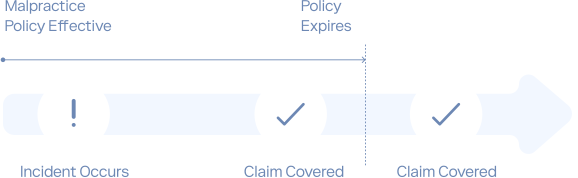
Coverage applies to claims filed during the policy period, requiring tail coverage for future claims.

Leading Medical Malpractice Insurance Companies in Connecticut
In addition to the below insurers, DocShield typically provides your practice with quotes from several other highly rated insurers. Ratings provided by AM Best (the leading insurance credit rating agency).
MedPro
Coverys
ProAssurance
Liberty
Malpractice Insurance Cost in Connecticut
The data below represent undiscounted premiums. Docshield is often able to save practices 30-50% relative to these rates.
| Medical Specialty | Average Premium | Lowest Premium |
|---|---|---|
| Anesthesiology | $22,100 | $12,324 |
| Cardiovascular Disease - Minor Surgery | $23,900 | $16,147 |
| Dermatology - No Surgery | $9,900 | $6,798 |
| Emergency Medicine | $36,900 | $25,496 |
| Family Practice - No Surgery | $15,900 | $9,773 |
| Gastroenterology - No Surgery | $19,500 | $14,449 |
| General Practice - No Surgery | $16,000 | — |
| General Surgery | $62,500 | $25,496 |
| Internal Medicine - No Surgery | $16,400 | $11,687 |
| Neurology - No Surgery | $20,700 | $14,449 |
| Obstetrics and Gynecology - Major Surgery | $90,600 | $42,493 |
| Occupational Medicine | $9,900 | $6,798 |
| Ophthalmology - No Surgery | $10,700 | $5,950 |
| Orthopedic Surgery - No Spine | $46,100 | $25,496 |
| Pathology - No Surgery | $12,100 | $8,499 |
| Pediatrics - No Surgery | $15,600 | $9,773 |
| Psychiatry | $10,200 | $6,798 |
| Pulmonary Disease - No Surgery | $17,000 | $9,165 |
| Radiology - Diagnostic | $21,900 | $12,324 |
What Drives Malpractice Insurance Premiums in Connecticut
Connecticut's malpractice insurance premiums reflect a combination of state-specific and physician-specific factors. Key drivers include:
- Practice specialty and procedural risk
- Claims history and prior malpractice actions
- Coverage limits selected above the state's required minimums
- Policy type: claims-made versus occurrence
- Practice location within the state
- Hospital-employed versus independent practice status
- Tail coverage or prior acts coverage requirements
Because Connecticut mandates a minimum coverage level, every physician's baseline premium reflects that required floor before any adjustments are applied. Comparing quotes across multiple carriers is the most reliable way for a physician to identify competitive pricing.
Connecticut Malpractice Insurance Rates by Specialty
Premiums vary significantly by specialty in Connecticut, largely due to differences in claim frequency and severity.
Based on Docshield's own premium data:
- Dermatology, psychiatry, and pathology fall toward the lower end of the premium range.
- Family medicine, internal medicine, pediatrics, gastroenterology, neurology, radiology, and cardiology generally fall within the middle range.
- Emergency medicine, orthopedic surgery, general surgery, and OB/GYN are among the higher-premium specialties, along with other high-acuity surgical specialties such as neurosurgery.
Common Malpractice Policy Features in Connecticut
Beyond required coverage limits, many malpractice policies available in Connecticut include additional features worth understanding when comparing carriers. Common features include:
- Full physician consent-to-settle: Requires insurer approval from the physician before a claim can be settled
- Defense costs outside the policy limits: Legal defense expenses do not reduce the available coverage limit
- Free tail coverage upon retirement, death, or disability: Offered by some carriers as a built-in benefit rather than a separately purchased endorsement
- Complementary regulatory coverage: May include defense for HIPAA or HITECH violations, medical board license defense, billing errors and omissions, and cyber liability
Availability of these features varies by carrier and policy, so physicians should review policy terms closely when comparing options.
Nose Coverage in Connecticut
Physicians switching from one claims-made policy to another may also consider nose coverage, also known as prior acts coverage.
Nose coverage extends protection retroactively to a specific date before the new policy begins, covering incidents that occurred under a prior policy but are reported after the new one takes effect. This can help close a coverage gap for physicians changing carriers without continuous claims-made coverage.
Working with Medical Malpractice Insurance Brokers in Connecticut
A licensed broker can help you navigate the administrative work involved in getting quotes and the nuances of choosing a policy. Importantly, brokers work for you, not a single insurer. They can shop across multiple insurers to find you the most competitive premium for a policy.
Buy Affordable Malpractice Insurance with Docshield
We've built the fastest application process in the industry so you don't have to disrupt your schedule to shop for coverage, whether you practice in Bridgeport, Stamford, New Haven, or Hartford. After you select a policy, we automatically scan the market every year before renewal to ensure you're paying a fair price.
Get a QuoteConnecticut Claims Payout
Connecticut Statute of Limitations
Connecticut law generally requires medical malpractice claims to be filed within:
- Two years from the date of the alleged injury, or the date the injury was discovered; but
- No more than three years from the date of the alleged injury, regardless of when it was discovered.
This second deadline is known as a statute of repose. Unlike many other states, Connecticut does not provide an extended filing deadline for claims involving minors.
Claims may be reported years after treatment occurred. Physicians should factor these deadlines into decisions about claims-made coverage, prior acts coverage, and tail insurance.
Tort Reform in Connecticut
Connecticut does not place statutory limits on economic or non-economic damages in medical malpractice cases. Instead, juries determine appropriate compensation based on the specifics of each case. A plaintiff's award can be reduced by their own percentage of fault in causing the injury.
Connecticut law also generally requires plaintiffs to complete a pre-suit process, including a reasonable inquiry and a written opinion letter establishing good faith grounds for the claim.
Because Connecticut does not cap damages, tail coverage is an especially important consideration for physicians on claims-made policies. Physicians commonly review their need for tail coverage when changing employers, changing carriers, selling a practice, or retiring.
The State of Connecticut's Malpractice Insurance Market
Connecticut's malpractice insurance market has historically featured limited carrier participation relative to many other states. This has contributed to persistently high premiums. While claim frequency has moderated over time, the number of active carriers has remained relatively stable rather than expanding significantly.
Several factors continue to shape the market:
- The absence of statutory damage caps
- Connecticut's modified comparative fault standard
- The state's mandatory minimum coverage requirement
- Limited entry of new carriers relative to other states
Medical Malpractice Claims Trends in Connecticut
Recent state data offer insight into how malpractice claims in Connecticut are resolved and how much they cost. According to a 2025 report from the Connecticut Insurance Department, Connecticut saw 2,241 total closed malpractice claims over the preceding five years:
- 1,270 claims were resolved in favor of the plaintiff
- 971 claims were resolved in favor of the defendant
Payout amounts also varied by insurer type. The average indemnity payout to a claimant was $987,710. Broken down by insurer type:
- Commercial insurers paid an average of $743,208
- Captive or self-insurers paid an average of $1,146,478
How Docshield Supports Connecticut Physicians
Connecticut's combination of mandatory coverage requirements, limited carrier competition, and an uncapped damages environment makes coverage comparison especially important.
Docshield helps physicians by:
- Simplifying the application process amid Connecticut's required minimum coverage standards
- Comparing coverage options across multiple carriers actively writing in Connecticut
- Assisting with renewals and coverage transitions
- Supporting informed insurance purchasing decisions