


Delaware Professional Liability: 2026 Guide
Medical malpractice insurance helps Delaware physicians manage the financial risk of malpractice claims while protecting their medical practice and professional assets. Delaware does not require physicians to carry medical malpractice insurance as a condition of state licensure. However, many hospitals and healthcare organizations require professional liability coverage.
Delaware's medical negligence laws establish specific procedures and filing deadlines for malpractice claims, including a two-year statute of limitations with limited statutory exceptions in certain circumstances. Medical malpractice insurance premiums in Delaware vary based on factors such as specialty, claims history, selected coverage, and individual insurer underwriting.
Delaware physicians should evaluate policy limits, policy type, insurer financial strength ratings, and long-term coverage needs when selecting professional liability insurance.
Despite the lack of significant tort reforms, Delaware's tort system exists, contributing to its legal stability.
How Much Is Medical Malpractice Insurance in Delaware?
Medical malpractice insurance costs in Delaware vary by specialty, claims history, coverage selections, and insurer underwriting guidelines.
The Delaware premium examples below show how annual premiums differ across physician specialties. Lower-risk specialties generally have lower premiums than surgical specialties, which typically face higher malpractice risk and correspondingly higher insurance costs.
Medical Malpractice Insurance Requirements in Delaware
Delaware does not mandate malpractice insurance for physicians, but many hospitals and healthcare facilities require coverage for privileges.
Typical policy limits are $1 million per occurrence and $3 million aggregate. The first amount is how much your insurance provider will pay per claim, and the second amount indicates your annual limit.
Occurrence vs Claims-Made Malpractice Policies in Delaware
Delaware physicians may choose between claims-made and occurrence coverage, depending on insurer availability and underwriting.
Coverage applies to incidents that occur during the policy period, regardless of when the claim is filed.
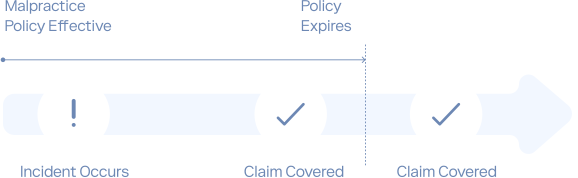
Coverage applies to claims filed during the policy period, requiring tail coverage for future claims.

Leading Medical Malpractice Insurance Companies in Delaware
In addition to the below insurers, DocShield typically provides your practice with quotes from several other highly rated insurers. Ratings provided by AM Best (the leading insurance credit rating agency).
ProAssurance
MedPro
Coverys
Curi
Malpractice Insurance Cost in Delaware
The data below represent examples of undiscounted premiums and assume full-time hours. Docshield is often able to save practices 30-50% relative to these rates.
| Medical Specialty | Average Premium | Lowest Premium |
|---|---|---|
| Anesthesiology | $16,600 | $8,907 |
| Cardiovascular Disease - Minor Surgery | $19,300 | $11,670 |
| Emergency Medicine | $28,100 | $18,426 |
| Family Practice - No Surgery | $12,600 | $7,063 |
| Gastroenterology - No Surgery | $15,300 | $10,442 |
| General Practice - No Surgery | $12,600 | $7,063 |
| General Surgery | $40,000 | $18,426 |
| Internal Medicine - No Surgery | $13,600 | $8,446 |
| Neurology - No Surgery | $18,000 | $10,442 |
| Obstetrics and Gynecology - Major Surgery | $71,800 | $30,709 |
| Occupational Medicine | $7,900 | $4,913 |
| Ophthalmology - No Surgery | $10,200 | $4,300 |
| Orthopedic Surgery - No Spine | $39,400 | $18,426 |
| Pathology - No Surgery | $11,800 | $6,142 |
| Pediatrics - No Surgery | $12,600 | $7,063 |
| Psychiatry | $9,600 | $4,913 |
| Pulmonary Disease - No Surgery | $16,800 | $10,442 |
| Radiology - Diagnostic | $17,000 | $8,907 |
Factors That Affect Malpractice Insurance Pricing in Delaware
Medical malpractice insurance premiums in Delaware vary based on individual underwriting characteristics. Common factors insurers consider include medical specialty, geographic practice location, prior malpractice claims history, coverage limits, and policy type.
Delaware's legal framework governing medical negligence claims is one of several factors that may influence medical malpractice insurance underwriting. Delaware law also establishes specific procedures for medical negligence actions, including filing deadlines and pre-suit affidavit requirements.
Working with Medical Malpractice Insurance Brokers in Delaware
A licensed broker can help you navigate the administrative work involved in getting quotes and the nuances of choosing a policy that fits your particular practice. Importantly, brokers can shop across multiple insurers to find you the most competitive premium for a high-quality policy.
Medical Malpractice Insurance by Specialty in Delaware
Every specialty faces different malpractice risks, resulting in significant differences in insurance premiums. Examples include:
- Lower: Occupational Medicine, Psychiatry, Ophthalmology
- Moderate: Internal Medicine, Radiology, Cardiology, Emergency Medicine
- Higher: General Surgery, Orthopedic Surgery, Obstetrics & Gynecology
Docshield helps physicians compare coverage and cost from multiple malpractice insurance carriers, depending on the type and specialty.
Buy Affordable Malpractice Insurance with Docshield
Docshield simplifies the malpractice insurance shopping process by reducing application time and helping physicians compare coverage from multiple carriers. After a policy is selected, Docshield benchmarks coverage before renewal and keeps physicians informed about available market options and specialty-specific claims trends.
Get a QuoteDelaware Claims Payout
Delaware Statute of Limitations
Delaware law generally requires medical negligence actions to be filed within two years of the alleged injury.
Limited statutory exceptions apply. If the injury could not reasonably have been discovered within the initial two-year period, an action may be filed within three years of the alleged injury. Delaware law also provides special filing deadlines for certain claims involving children under the age of six and extends the filing period by 90 days when a Notice of Intent to investigate is timely served in accordance with state law.
Tort Reform in Delaware
Delaware's medical professional liability market includes national and regional insurers offering coverage to physicians across multiple specialties.
Premiums vary based on specialty, claims history, policy type, coverage limits, and insurer underwriting guidelines. Delaware's Health-Care Medical Negligence Insurance and Litigation Act establishes filing deadlines and procedural requirements for medical negligence actions.
Trends Affecting Delaware Physicians
Several healthcare trends continue to influence Delaware physicians and the practice environment:
- The Delaware Health Force serves as the state's healthcare workforce data center, using licensing and workforce data from the Delaware Division of Professional Regulation and other state and federal sources to support workforce planning and policy decisions.
- Delaware's Health-Care Medical Negligence Insurance and Litigation Act requires most medical negligence complaints to be accompanied by an affidavit of merit signed by a qualified medical expert, unless a statutory exception applies.
Delaware Medical Negligence Laws and Tail Coverage
Delaware's Health-Care Medical Negligence Insurance and Litigation Act establishes procedures governing medical negligence actions. These include filing deadlines, an affidavit of merit requirement for most medical negligence complaints, and a Notice of Intent process that may extend the filing deadline under certain circumstances.
Unlike some states, Delaware does not impose a general statutory cap on non-economic damages in medical malpractice actions.
For physicians insured under a claims-made malpractice policy, tail coverage is an important consideration. Tail coverage, also known as an extended reporting endorsement, extends the period during which covered claims may be reported after a claims-made policy ends.
How Docshield Helps Physicians Navigate Delaware Malpractice Insurance
Choosing medical malpractice insurance involves more than comparing premiums. Physicians should also evaluate policy structure, coverage limits, insurer financial strength ratings, and long-term coverage needs.
Docshield helps physicians by:
- Simplifying the application process
- Comparing coverage options from multiple insurance carriers
- Explaining policy differences in clear, straightforward language
- Benchmarking policies before renewal to help physicians evaluate available market options
These services are designed to help physicians compare professional liability coverage more efficiently and make informed insurance decisions.