


Malpractice Insurance for Neurosurgeons
Neurosurgery involves high-risk, highly technical procedures where outcomes can have significant long-term implications. Malpractice insurance decisions for neurosurgeons often need to account for surgical precision, long-term neurological outcomes, and the potential severity of claims.
Docshield helps neurosurgeons review malpractice insurance options with clear coverage details and pricing from high-quality insurers. Whether your practice focuses on cranial, spinal, vascular, functional neurosurgery, or other subspecialty areas, Docshield provides a structured way to evaluate coverage that aligns with how you practice.
Why Malpractice Insurance for Neurosurgeons Is Different
Neurosurgery has its own coverage nuances, and in some cases may involve higher-severity exposures depending on procedure mix, acuity, and setting.
Common risk considerations in neurosurgical practice include:
- Highly technical procedures involving the brain, spine, and nervous system
- Elevated claim severity due to permanent neurological injury risk
- Emergency and trauma-based care with a limited margin for error
- Long-term patient outcomes that may result in delayed claims
- High expectations for surgical precision and post-operative recovery
Because claims may involve substantial damages and extended reporting timelines, malpractice coverage for neurosurgeons often requires careful attention to policy structure, limits, and long-term exposure, not just premium cost.
Speak with a Med Mal Expert
Colleen Heuer, Account Executive
Neurosurgery Malpractice Risk, by the Numbers
Neurosurgery is associated with a high level of malpractice exposure, reflecting both the complexity of care and the potential severity of patient outcomes.
- 80% of neurosurgeons report being sued at least once (Medscape 2021)
- 15% report involvement in a lawsuit resulting in $1M+ in damages (Gadjradj et al., Neurosurgical Focus, 2020)
- $439,146 average indemnity paid in closed neurosurgical claims (Elsamadicy et al., Neurosurgery, 2018; PIAA data 2003–2012)
The concentration of claims around improper surgical performance and spine-related procedures reflects the technical precision required in neurosurgical care, where even small deviations can result in permanent neurological deficits. Spine cases accounted for 56% of all neurosurgery claims, while head and brain cases represented 39% (Elsamadicy et al., Neurosurgery, 2018; PIAA data 2003–2012). The severity of outcomes in neurosurgical claims is notable: nearly 23% of all claims involved patient death, and the average indemnity ranked first among all 27 medical specialties in the PIAA database. This combination of high per-claim severity and complex long-term outcomes makes neurosurgery one of the most expensive specialties to insure, and underscores the importance of evaluating policy limits, tail coverage, and insurer financial strength alongside premium cost.
The Biggest Challenges Neurosurgeons Face When Buying Malpractice Insurance
Neurosurgeons frequently encounter challenges that go beyond those faced by lower-risk specialties.
Interpreting Coverage for High-Severity Procedures
Policy language may not clearly explain how catastrophic injury claims, surgical complications, or long-term neurological outcomes are addressed. Differences between insurers can be difficult to evaluate without a detailed comparison.
Evaluating Policy Structure Decisions
Claims-made versus occurrence coverage can have significant long-term implications in neurosurgery, particularly given extended statutes of limitation and claim reporting timelines.
High Premiums With Limited Benchmarking
Neurosurgery premiums can change materially based on limits, retroactive date structure, and acuity mix. When rates are presented without benchmarking or a consistent comparison format, it is difficult to evaluate whether a quote reflects the real risk profile of the practice.
Aligning Coverage With Practice Environment
Neurosurgeons often practice across hospitals, trauma centers, and specialty facilities. Coverage must reflect where care is delivered and how responsibilities are shared.
Managing Administrative Complexity
Traditional malpractice insurance processes can be slow and paperwork-intensive, creating friction for surgeons with limited administrative bandwidth.
Coverage Considerations for Neurosurgical Practice
When evaluating malpractice coverage, neurosurgeons typically are choosing between two policy frameworks that determine how and when claims are addressed:
Occurrence vs Claims-Made Malpractice Policies
Understanding the two main types of malpractice insurance policy structures.
Coverage applies to incidents that occur during the policy period, regardless of when the claim is filed.
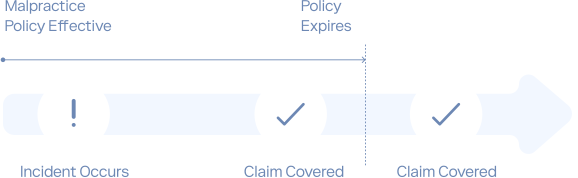
Coverage applies to claims filed during the policy period, requiring tail coverage for future claims.

- Under a claims-made policy, coverage is tied to an active policy period, which means protection may need to be extended if a surgeon changes roles or coverage ends.
- Occurrence policies, by contrast, are linked to when the procedure took place and continue to respond to claims even if they are filed years later.
You may also encounter claims-made plus quotes. This is still a claims-made policy, but it is priced so the expected tail cost is built into the premium, eliminating the need to purchase a separate tail — similar to occurrence coverage. However, unlike an occurrence policy, the aggregate coverage limit does not reset each policy year. Not every carrier offers this option, and many neurosurgical practices only receive quotes for a subset of policy structures.
Because neurosurgical claims may involve delayed reporting and long-term neurological outcomes, the choice between these structures is often influenced by career stability, anticipated transitions, and long-range liability considerations.
Practice-Specific Factors That Affect Coverage
Coverage considerations for neurosurgeons may be influenced by:
- Cranial versus spinal procedure mix
- Trauma and emergency call responsibilities
- Hospital-employed versus independent practice arrangements
- Use of advanced practice providers or surgical assistants
- Practice across multiple facilities or jurisdictions
Comparable structural considerations are seen in other high-risk procedural specialties, including general surgery and orthopedic surgery, though neurosurgery often carries higher claim severity.
Tail Coverage for Neurosurgeons
For neurosurgeons insured under claims-made policies, coverage generally applies only while the policy remains in force. Claims reported after coverage ends may require extended reporting protection.
Tail coverage considerations often arise when neurosurgeons change practices, transition employment arrangements, reduce surgical scope, or retire. Exposure can vary based on subspecialty focus, prior policy terms, coverage limits, and jurisdictional rules.
When switching carriers, some quotes may include prior-acts (nose) coverage that preserves your existing retroactive date. Because this varies by insurer and underwriting, you should not assume it is included. A licensed agent should verify the retroactive date and confirm whether tail coverage is still required to avoid an unintended lapse in protection.
Incorporating tail coverage planning into malpractice insurance decisions can help ensure continuity of protection during professional transitions.
How Much Does Malpractice Insurance for Neurosurgeons Cost?
Malpractice insurance costs for neurosurgeons are typically higher than for many other specialties due to the severity of potential claims.
Key cost drivers often include:
- Subspecialty focus and procedure complexity
- Trauma and emergency case volume
- State and local liability environment
- Claims history
- Coverage limits and policy structure
Because these factors differ meaningfully between practices, premiums can vary widely. Reviewing options across multiple insurers can help place pricing in the proper context. For a ballpark sense of neurosurgery malpractice premium ranges in your state, visit our malpractice insurance state resources page.
Common Drivers Seen in Neurosurgical Malpractice Claims
Closed-claims analyses have identified recurring allegation patterns such as:
- Improper performance of surgery (40% of claims)
- Improper management of the surgical patient (33% of claims)
- Technical performance as the greatest factor leading to injury (65% of claims)
- Patient assessment issues (29%) and selection/management of therapy (27%) as contributing factors
- Communication among providers contributing to injury in 28% of diagnosis-related claims (The Doctors Company)
Recent Trends Affecting Neurosurgical Malpractice Insurance
Evolving practice models continue to shape malpractice insurance considerations for neurosurgeons.
- Centralization of care at trauma and specialty centers, increasing exposure to high-acuity cases
- Hospital employment and hybrid arrangements, which may require individual coverage beyond institutional policies
- Advances in surgical technology, influencing both risk profile and patient expectations
- Expanded use of multidisciplinary care teams, requiring clear definitions of shared responsibility
- Cross-state consultative care and follow-up, introducing jurisdiction-specific coverage considerations
As neurosurgical care evolves, malpractice insurance increasingly needs to be evaluated in the context of actual clinical practice.
Docshield and Traditional Malpractice Brokers Compared
Neurosurgical coverage decisions can hinge on details that are hard to compare across carriers without a consistent format. Docshield makes it easier to apply, compare terms, and make a deliberate decision with support from licensed MPL-focused agents.
Traditional brokers vs Docshield
| Feature | Docshield | Others |
|---|---|---|
| Med mal experts 100% focused on outpatient coverage | ||
| Online app in <15 minutes per physician | ||
| Committed to approaching a broad swathe of insurers | ||
| Transparent pricing, no hidden incentives | ||
| Continuous monitoring so you never overpay | ||
| Digital-first experience combined with 24/7 human support | ||
| Claims insights for your medical specialty |
How Docshield Works for Neurosurgeons
Docshield is designed to help neurosurgeons navigate malpractice insurance decisions with greater clarity and less administrative friction.
- Apply fast, with less admin — We keep the application focused and reduce repetitive data entry by pulling key practice information.
- Review quotes with a licensed expert — A Docshield agent helps you evaluate options side by side, including limits, retro dates, and key endorsements.
- Choose coverage without a rushed timeline — Select the option that fits your setting and plans, without pressure-driven decisions.
- Add full-practice coverage lines — Bundle BOP, GL, EPLI, D&O, and other coverages as needed.
- Stay aligned as practice evolves — Annual rate monitoring, ongoing coverage maintenance for roles/locations, and eligible practices can receive tailored risk updates highlighting emerging claim themes.
Get Malpractice Insurance for Neurosurgeons With Clear, Competitive Pricing
Docshield helps neurosurgeons review malpractice insurance options with greater clarity and efficiency.
Complete a brief online intake to review malpractice coverage options and pricing from high-quality insurers, without extended timelines or manual broker coordination.
Buy Affordable Malpractice Insurance with Docshield
We've built the fastest application process in the industry so you don't have to disrupt your schedule to shop for coverage. After you select a policy, we automatically scan the market every year before renewal to ensure you're paying a fair price.
Get a Quote