


OBGYN Malpractice Insurance for Today's Practices
OBGYN malpractice insurance refers to physician professional liability coverage for obstetric and gynecologic care. While the core purpose of coverage is the same, underwriting for OBGYNs often accounts for procedural exposure and longer reporting horizons associated with obstetric outcomes.
Docshield helps obstetricians and gynecologists compare malpractice insurance options efficiently, with clear coverage details and competitive pricing from high-quality insurers. Whether you provide labor and delivery services, perform gynecologic surgery, or manage a growing practice, Docshield simplifies the process of securing coverage that aligns with your clinical activities without mountains of paperwork or a disjointed experience. Docshield reduces the administrative burden so licensed agents can spend more time helping you understand coverage options and less time chasing forms.
Why OBGYN Malpractice Insurance Is Different
Obstetrics and gynecology combines medical management with surgical and procedural care, and malpractice coverage for OBGYNs often needs to account for both the breadth of services provided and the potential severity of outcomes compared to general physicians.
Risk factors commonly associated with OBGYN practice include:
- Labor and delivery services
- Cesarean sections and operative vaginal deliveries
- Gynecologic and minimally invasive surgical procedures
- Birth injury claims where statutes of limitation may be tolled until the child reaches the age of majority
Because certain obstetric claims can surface years after care is delivered, policy structure and reporting timelines can matter as much as the premium.

Speak with a Med Mal Expert
Colleen Heuer, Account Executive
OBGYN Malpractice Risk, by the Numbers
Malpractice claims in obstetrics and gynecology often reflect both the frequency of litigation and the potential financial impact of adverse outcomes:
- 79% of OB/GYNs report having been named in a lawsuit (Medscape 2021)
- 55% of claims against OB/GYNs are dropped, withdrawn, or dismissed with no indemnity payment (MPL Association Data Sharing Project, 2020 Edition)
- $459,469 average indemnity paid in a closed OB/GYN malpractice claim (ibid)
Common Reasons Cited for Lawsuits Against OBGYNs
Medscape survey respondents reported lawsuits most often tied to:
- 39% complications from treatment or surgery
- 30% poor outcome or disease progression
- 25% failure to diagnose or delayed diagnosis
- 17% patient suffered an abnormal injury
Closed-claims research has also highlighted maternal injury patterns that, while a smaller share of obstetric claims, can involve severe outcomes. In one analysis, postpartum hemorrhage accounted for 15% of diagnoses tied to claims and preeclampsia/eclampsia for 9%, with a meaningful share resulting in serious injury or death (The Doctors Company closed claims study, 2013–2017).
The Biggest Challenges OBGYNs Face When Buying Malpractice Insurance
Buying OBGYN malpractice insurance is rarely straightforward. Many obstetricians and gynecologists run into the same issues, especially when working with traditional brokers or outdated processes.
High Premiums With Little Transparency
OBGYN malpractice insurance is expensive, but many physicians aren't shown why their rates are high or whether they're competitive. Without true benchmarking, it's easy to overpay year after year.
Confusing Policy Structures
Claims-made vs. occurrence coverage, tail requirements, and coverage limits aren't always explained clearly. OBGYNs are often asked to choose policies without fully understanding the long-term financial impact.
Tail Coverage Surprises
Because birth injury claims can surface years later, tail coverage is a major risk for OBGYNs. Many physicians don't learn how expensive tail coverage is until they're switching jobs or retiring.
Coverage That Doesn't Match How You Practice
From labor and delivery to surgical procedures and mid-level providers, OBGYN practices are complex. Generic policies may leave gaps that only surface when a claim occurs.
Time-Consuming, Paper-Heavy Applications
Between patient care and practice management, OBGYNs don't have time for endless forms and follow-ups just to get a quote.
What Coverage Do OBGYN Practices Actually Need?
Claims-Made vs. Occurrence Coverage
Most OBGYN malpractice insurance policies fall into one of two categories:
Occurrence vs Claims-Made Malpractice Policies
Understanding the two main types of malpractice insurance policy structures.
Coverage applies to incidents that occur during the policy period, regardless of when the claim is filed.
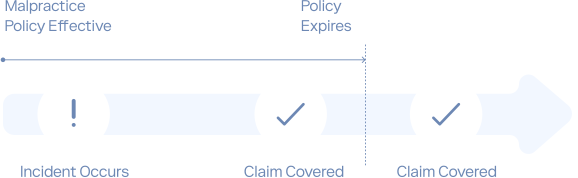
Coverage applies to claims filed during the policy period, requiring tail coverage for future claims.

- Claims-made policies provide coverage for claims that are filed while the policy is active. These policies often have lower upfront premiums but typically require the purchase of tail coverage when an OBGYN leaves a practice, switches insurers, or retires.
- Occurrence policies provide coverage for incidents that occur during the policy period, regardless of when a claim is filed. These policies generally have higher premiums, but tail coverage is not required.
Some insurers also offer claims-made plus options, where the premium is structured to include the cost of tail coverage. This removes the need to purchase a separate tail, similar to occurrence coverage, though unlike an occurrence policy the aggregate coverage limit does not reset each policy year. Availability varies by state and carrier, and practices often receive quotes for only a subset of policy structures.
The appropriate choice depends on factors such as your career stage, practice structure, and long-term professional plans.
Coverage Considerations for OBGYNs
OBGYN policies often need to account for:
- Labor and delivery services
- C-sections and obstetric surgery
- Gynecologic procedures and in-office care
- Coverage for nurse practitioners and physician assistants
- Solo practices vs. multi-physician groups
Docshield helps ensure your coverage actually matches how you practice and not just what's cheapest on paper.
Tail Coverage for OBGYNs
Tail coverage, also known as extended reporting coverage, allows claims to be reported after a claims-made malpractice policy has ended.
For OBGYNs, this can help protect against claims that arise years after care was provided, including claims related to labor, delivery, and birth outcomes. Because statutes of limitation for birth injury claims are often lengthy, liability exposure may extend well beyond the end of an active policy.
Tail coverage is commonly required when an OBGYN:
- Leaves a practice
- Switches malpractice insurers
- Transitions from employed to independent work
- Retires from clinical practice
The cost and structure of tail coverage depend on factors such as prior policy terms, coverage limits, claims history, and state regulations. In some cases, selecting the right policy structure upfront can reduce long-term tail exposure.
If you switch carriers, you may be offered prior-acts (nose) coverage that preserves your retroactive date. Because this is not automatic and varies by insurer and underwriting, a licensed agent should confirm in writing whether prior-acts coverage is included and whether tail coverage is still required to avoid a gap, especially given the longer reporting horizons that can apply in obstetrics.
Docshield helps OBGYNs understand how tail coverage fits into their overall malpractice insurance strategy so there are no surprises when practice or career changes occur.
How Much Does OBGYN Malpractice Insurance Cost?
The cost of OBGYN malpractice insurance varies widely based on factors such as:
- State and local liability climate
- Annual delivery volume
- Claims history
- Coverage limits
- Practice size and structure
Many OBGYNs overpay simply because they aren't shown true market benchmarks. We benchmark rates across top-rated carriers so you can see what fair pricing actually looks like. For a ballpark sense of OBGYN malpractice premium ranges by state, visit our state resource page.
Recent Trends Changing OBGYN Malpractice Insurance
OBGYN practice models continue to evolve, and malpractice insurance needs to reflect how and where care is delivered.
- Hospital employment with supplemental coverage needs: Many employed OBGYNs still require individual policies to cover moonlighting, independent work, or gaps in employer-provided coverage.
- Locum tenens and part-time work: Short-term or mixed employment arrangements can affect policy eligibility, reporting requirements, and tail coverage obligations.
- Hybrid and multi-state practices: Practicing across multiple locations or states may require policies that account for differing regulatory and liability environments.
- Telemedicine and remote patient care: Coverage must align with the services provided and the jurisdictions in which patients are treated.
- Use of advanced practice providers: Policies should clearly define supervision, scope of practice, and shared liability for nurse practitioners and physician assistants.
Traditional insurance workflows are often slow to account for these complexities. Docshield is designed to evaluate malpractice coverage based on how an OBGYN practices today, helping ensure policies remain aligned as roles and practice structures change.
Docshield and Traditional Malpractice Brokers Compared
Many OBGYNs still obtain coverage through traditional agency workflows that can make benchmarking and policy comparisons difficult. Docshield provides a faster, more transparent process backed by licensed MPL-focused agents.
Traditional brokers vs Docshield
| Feature | Docshield | Others |
|---|---|---|
| Med mal experts 100% focused on outpatient coverage | ||
| Online app in <15 minutes per physician | ||
| Committed to approaching a broad swathe of insurers | ||
| Transparent pricing, no hidden incentives | ||
| Continuous monitoring so you never overpay | ||
| Digital-first experience combined with 24/7 human support | ||
| Claims insights for your medical specialty |
Docshield helps OBGYN practices secure malpractice insurance efficiently while reducing administrative burden and improving visibility into coverage options.
How Docshield Works For OBGYN Practices
Docshield is designed to reduce the time and complexity involved in securing malpractice insurance, while giving OBGYNs clear visibility into coverage options.
- Apply in minutes — A short online application designed to reduce repetitive data entry.
- Review options with a licensed expert — A Docshield agent helps you compare terms and pricing side by side, with attention to obstetric exposure and reporting timelines.
- Choose coverage without pressure — Select the policy that fits your practice structure and plans, without rushed decisions.
- Complete your coverage — Add BOP, GL, EPLI, D&O, and other lines to protect the full practice.
- Manage coverage and stay ahead of risk — We monitor rates annually, keep your roster and locations current, and eligible practices can receive tailored risk updates that summarize emerging claim themes and prevention insights.
Get OBGYN Malpractice Insurance With Clear, Competitive Pricing
Docshield helps OBGYNs compare malpractice insurance options efficiently, with transparent pricing and coverage details.
Apply online in minutes to review quotes from high-quality insurers without unnecessary paperwork or prolonged broker negotiations.
Buy Affordable Malpractice Insurance with Docshield
We've built the fastest application process in the industry so you don't have to disrupt your schedule to shop for coverage. After you select a policy, we automatically scan the market every year before renewal to ensure you're paying a fair price.
Get a Quote