


Physician Malpractice Insurance for Today's Practices
Physician malpractice insurance plays a central role in protecting both individual clinicians and the practices they work within. However, evaluating coverage can be difficult due to differences in specialty risk, employment arrangements, and state-level liability rules.
Docshield helps physicians compare malpractice insurance with less friction and more clarity. Our licensed agents focus on medical professional liability as the core of what we do, and our platform is built to help you apply quickly without mountains of PDF data entry. Whether you practice independently, work within a group, or are employed by a health system, Docshield helps you choose coverage that fits how you practice medicine today.
Why Physician Malpractice Insurance Is Different
Physician malpractice insurance varies significantly across specialties, practice settings, and jurisdictions. A policy that is appropriate for one physician may be poorly suited for another, even within the same practice. For example, malpractice considerations for orthopedic surgeons often reflect higher procedural volume and long-term outcome risk compared to non-procedural specialties.
Differences in claim frequency, claim severity, and statutes of limitation can all affect long-term liability exposure. In addition, state laws governing damages and reporting requirements play an important role in determining how coverage responds over time.
Because of this variability, malpractice insurance decisions require evaluating policy structure, coverage terms, and long-term exposure, rather than just premium cost.

Speak with a Med Mal Expert
Colleen Heuer, Account Executive
The Biggest Challenges Physicians Face When Buying Malpractice Insurance
Physicians frequently encounter similar obstacles when reviewing malpractice coverage, regardless of specialty.
Limited Visibility Into Coverage Differences
Policy language and endorsements can make it difficult to understand how coverage varies between insurers. Comparing exclusions, limits, and reporting requirements often requires more time than physicians can reasonably spare.
Unclear Policy Structure Decisions
Claims-made and occurrence coverage function differently over time, but the implications of each are not always explained clearly. Physicians may be asked to choose coverage without fully understanding how it affects future flexibility.
Uncertainty Around Tail Coverage
Extended reporting requirements are often overlooked until a physician changes roles, switches insurers, or retires. At that point, tail coverage obligations can become both urgent and costly.
High Premiums With Limited Benchmarking
Physicians are frequently shown a premium without clear context for whether it is competitive. Without side-by-side benchmarking across reputable carriers, it's easy to renew into a rate that does not reflect your current role, setting, or risk profile.
Administrative Burden
Traditional application and renewal processes can involve repeated paperwork, follow-ups, and delays, making it difficult for physicians to reassess coverage regularly.
Coverage Considerations for Physician Practice
Malpractice insurance needs can differ based on how a physician practices, rather than their specialty alone.
Policy Structure and Coverage Design
Physician malpractice policies are typically issued as either claims-made or occurrence coverage:
Occurrence vs Claims-Made Malpractice Policies
Understanding the two main types of malpractice insurance policy structures.
Coverage applies to incidents that occur during the policy period, regardless of when the claim is filed.
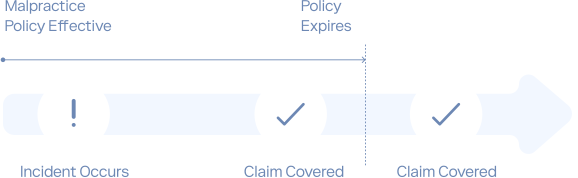
Coverage applies to claims filed during the policy period, requiring tail coverage for future claims.

- Claims-made coverage applies only while the policy is active, which may require additional reporting protection when coverage ends.
- Occurrence coverage applies based on when care was provided and does not require extended reporting.
Selecting between these options often depends on employment stability, anticipated career transitions, and long-term planning considerations.
Practices may also encounter claims-made plus coverage, which is a claims-made policy where the premium is structured to include the cost of tail coverage. This eliminates the need to purchase a separate tail — similar to occurrence coverage. However, unlike an occurrence policy, the aggregate coverage limit does not reset each policy year. Not every insurer offers every structure in every state, and many practices only receive quotes for one or two of these options.
Practice-Level Factors That Affect Coverage
Coverage decisions may be influenced by:
- Employed versus independent practice arrangements, including whether coverage supplements or replaces employer-provided insurance
- Solo practice versus group settings, where shared liability and policy structure may differ
- Procedural versus non-procedural care, which can affect claim frequency and severity
- Use of advanced practice providers, requiring clear definitions of supervision and shared responsibility
- Multi-location or multi-state practice, where regulatory and reporting requirements may vary
Ensuring that coverage reflects these factors can help reduce gaps and unintended exposure.
Tail Coverage for Physicians
For physicians insured under claims-made policies, coverage generally ends when the policy terminates. Claims reported after that point may require additional reporting protection.
Physicians often encounter tail coverage considerations when changing practices, transitioning between employment arrangements, or leaving clinical practice. The scope of exposure can vary based on specialty risk, prior coverage terms, and jurisdictional rules.
If you are changing insurers, ask whether the new policy includes prior-acts (nose) coverage that matches your current retroactive date. In some cases, this can reduce or eliminate the need to purchase a separate tail, but it is not guaranteed. A licensed agent should confirm the retroactive date and any tail obligations in writing so a gap in coverage is not created.
Planning for tail coverage as part of an overall malpractice strategy can help maintain continuity of protection during professional transitions.
How Much Does Physician Malpractice Insurance Cost?
Physician malpractice insurance costs are influenced by a combination of individual, practice-level, and regional factors. Higher-risk procedural specialties, such as neurosurgery, often experience greater claim severity, which can influence both pricing and coverage structure.
Common cost drivers include:
- Medical specialty and scope of care, including the types of services provided and level of clinical risk
- State and local liability environment, such as statutes of limitation and damage caps
- Claims history, including prior incidents or settlements that may affect underwriting
- Coverage limits and policy structure, which influence both premium cost and long-term exposure
- Practice size and employment model, including solo, group, or employed arrangements
Because these variables differ widely, premiums can vary significantly between physicians. Reviewing options across multiple insurers can provide clearer context for how pricing aligns with risk. For a ballpark sense of malpractice premium ranges by specialty in your state, visit our state malpractice insurance guides.
Recent Trends that Influence Physician Malpractice Coverage
Changes in how medical care is delivered continue to influence malpractice insurance needs.
- Shifts toward employed and hybrid practice models, where individual coverage may supplement employer-provided policies
- Growth in part-time and locum tenens work, which can affect coverage continuity and reporting requirements
- Expanded use of telemedicine, introducing jurisdiction-specific coverage considerations
- Increasing reliance on advanced practice providers, requiring clear definitions of supervision and shared liability
- Multi-state practice arrangements, where regulatory and coverage requirements may differ
As practice models evolve, malpractice insurance increasingly needs to be evaluated in context rather than treated as static coverage.
Docshield and Traditional Malpractice Brokers Compared
Many physicians still purchase malpractice coverage through traditional agencies because that has historically been the default. Docshield offers a faster, clearer workflow to apply, compare options, and manage coverage, supported by licensed agents who focus on MPL.
Traditional brokers vs Docshield
| Feature | Docshield | Others |
|---|---|---|
| Med mal experts 100% focused on outpatient coverage | ||
| Online app in <15 minutes per physician | ||
| Committed to approaching a broad swathe of insurers | ||
| Transparent pricing, no hidden incentives | ||
| Continuous monitoring so you never overpay | ||
| Digital-first experience combined with 24/7 human support | ||
| Claims insights for your medical specialty |
How Docshield Works for Physicians
Docshield is designed to reduce administrative burden while improving clarity around malpractice insurance decisions.
- Apply in minutes — Docshield pulls key practice details to keep the application short, without repetitive PDF data entry.
- Review your options with an expert — A licensed Docshield agent walks you through side-by-side quotes from top-rated insurers so you can compare terms with confidence.
- Choose coverage without a rush — Select the policy that fits your role, setting, and plans, without time-driven pressure.
- Complete your coverage — Add BOP, GL, D&O, EPLI, and other commercial lines to protect the full practice from one platform.
- Manage and reduce risk over time — We set up annual rate monitoring, keep your roster/roles/locations up to date, and eligible practices can opt into tailored risk updates that highlight emerging claim patterns and prevention themes.
Get Physician Malpractice Insurance With Clear, Competitive Pricing
Docshield supports physicians by simplifying how malpractice insurance options are reviewed and selected.
Submit a short online application to compare coverage and pricing from high-quality insurers without prolonged timelines or unnecessary paperwork.
Buy Affordable Malpractice Insurance with Docshield
We've built the fastest application process in the industry so you don't have to disrupt your schedule to shop for coverage. After you select a policy, we automatically scan the market every year before renewal to ensure you're paying a fair price.
Get a Quote