


Pathology Malpractice Insurance for Today's Pathology Practices
Pathology malpractice insurance supports physicians whose diagnostic work helps inform treatment decisions across a wide range of conditions and medical specialties. Evaluating pathology malpractice insurance can be complex because coverage needs may vary based on subspecialty, practice setting, diagnostic services, state, and employment structure.
Docshield helps pathologists compare malpractice insurance options efficiently, with clear coverage details and pricing from high-quality insurers. Whether you practice within a hospital, laboratory, multiple facilities, or in an academic setting, Docshield simplifies the process of evaluating coverage that's needed for your specific practice.
What Sets Pathology Malpractice Insurance Apart
Pathology is closely connected to the diagnostic process, so malpractice coverage often needs to reflect the physician's specific responsibilities, subspecialty, and practice environment.
Common professional liability considerations associated with pathology include:
- Surgical pathology and biopsy interpretation
- Cytopathology and fine-needle aspiration specimens
- Dermatopathology and other pathology subspecialties
- Communication of significant diagnostic findings
- Specimen identification and handling processes
- Diagnostic services involving multiple facilities
Coverage considerations can vary between pathologists depending on the type and scope of diagnostic work performed, making specialty-specific policy evaluation particularly important.
Learn more about medical malpractice insurance by specialty.

Speak with a Med Mal Expert
Colleen Heuer, Account Executive
Pathology Malpractice Risk, by the Numbers
Professional liability activity in pathology often reflects the specialty's central role in diagnosis, where findings may influence treatment decisions, additional testing, and follow-up care.
- 87% of paid pathology malpractice claims involved diagnosis-related allegations. National Library of Medicine
- 57% of pathology malpractice claims in a historical 1998–2003 dataset were concentrated across five areas: breast specimens, melanoma, cervical Pap tests, gynecologic specimens, and operational or system-related issues. National Library of Medicine
- In a later analysis of claims, five categories accounted for 49% of pathology malpractice claims: melanoma, breast specimens and fine-needle aspiration, system issues, gynecologic cytology, and non-breast fine-needle aspiration. National Library of Medicine
These findings describe historical professional liability claim patterns and do not indicate the likelihood of a claim for any individual pathologist.
Common Areas Cited in Pathology Malpractice Claims
Published pathology claims research has identified several recurring areas of professional liability activity, including:
- Diagnosis-related allegations
- Breast specimens and fine-needle aspiration
- Melanoma
- Gynecologic and cervical cytology
- Specimen identification and other system-related issues
- Reporting and communication of diagnostic findings
Claim patterns have also changed over time. Later research found significant declines in claims involving melanoma, breast specimens, and gynecologic cytology compared with earlier datasets.
The Biggest Challenges Pathologists Face When Buying Malpractice Insurance
Pathologists can encounter structural challenges when evaluating malpractice insurance, particularly when coverage needs to reflect specialized diagnostic responsibilities.
Limited Clarity Around Pathology Coverage
Policy language may not always make it immediately clear how specific pathology services, subspecialties, practice locations, or professional activities are addressed. Comparing exclusions, endorsements, and covered professional services can require careful policy review.
Complexity of Policy Structure
Choosing between claims-made and occurrence coverage can be confusing, especially when career changes, retirement, or movement between pathology groups may affect future coverage needs.
Understanding retroactive dates, tail coverage, and prior-acts coverage is particularly important when replacing an existing claims-made policy.
Variable Pricing With Limited Benchmarking
Pathology malpractice insurance rates can vary based on:
- Location
- Scope of practice
- Coverage limits
- Claims history
- Policy structure
- Insurer underwriting criteria
Without a consistent way to compare multiple options, it may be difficult to determine how one quote differs from another beyond the premium.
Coverage Alignment With Practice Setting
Pathologists may provide services through hospitals, independent laboratories, academic institutions, or multiple facilities. Coverage should accurately reflect where professional services are provided and the physician's actual scope of practice.
Time and Administrative Burden
Traditional applications and renewals can require repeated documentation and follow-up. For pathologists and pathology groups, that administrative workload can make regular market comparisons more difficult.
What Coverage Do Pathologists Actually Need?
Coverage considerations for pathologists can differ based on subspecialty, practice setting, employment structure, and state-specific requirements.
Policy Structure And Coverage Type
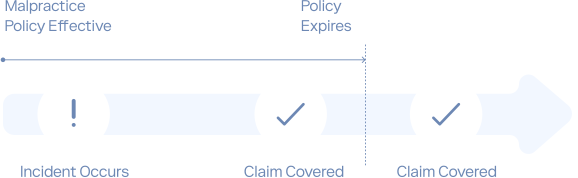
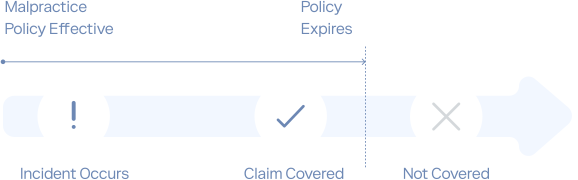
Occurrence vs Claims-Made Malpractice Policies
Understanding the two main types of malpractice insurance policy structures.
Coverage applies to incidents that occur during the policy period, regardless of when the claim is filed.
Coverage applies to claims filed during the policy period, requiring tail coverage for future claims.
Most pathology malpractice policies are issued as either claims-made or occurrence coverage:
- Claims-made policies generally provide coverage when a covered incident occurs after the applicable retroactive date and a claim is made or reported while the policy remains active, subject to policy terms. Tail coverage may be needed when the policy ends.
- Occurrence policies generally cover eligible incidents that take place during the policy period, even if a claim is made after the policy has ended. Separate tail coverage is generally not required.
Some practices may also encounter claims-made plus coverage. This is a claims-made structure priced to include the cost of tail coverage, which can reduce the likelihood of needing a separate tail purchase when the policy ends. Available structures vary based on the state, insurer, and underwriting terms.
The appropriate policy structure depends on factors such as employment arrangement, prior coverage, and anticipated career changes.
Practice-Specific Factors That Affect Coverage
Malpractice coverage for pathologists may need to reflect:
- Pathology subspecialty and scope of diagnostic services
- Hospital privileges and facility relationships
- Independent, employed, or group practice arrangements
- Number and type of practice locations
- States in which professional services are provided
- Claims history and prior malpractice coverage
Aligning the application and policy with current professional activities helps insurers evaluate the actual practice being submitted for coverage.
Employer or Group Coverage vs. Individual Coverage
Pathologists employed by a hospital, laboratory, academic institution, or pathology group may receive malpractice coverage through their employer. However, employer-provided coverage and individual policies are not necessarily interchangeable.
When evaluating existing employer or group coverage, it can be useful to confirm:
- Whether the physician is specifically included as an insured
- Whether coverage applies to all professional services and practice locations
- Whether limits are shared or individual
- Whether the policy is claims-made or occurrence
- Who is responsible for tail coverage after employment ends
- Whether outside professional activities are covered
Who May Need Pathology Malpractice Insurance?
Pathology malpractice insurance may be relevant across different pathology subspecialties and practice settings, depending on employment arrangements and existing coverage.
This can include:
- Anatomic and clinical pathologists
- Surgical pathologists
- Dermatopathologists
- Cytopathologists
- Hematopathologists
- Molecular and genetic pathologists
- Forensic pathologists
- Hospital, laboratory, and group-practice pathologists
Coverage needs vary by role and practice setting, particularly when pathology findings support care across specialties such as general surgery and gastroenterology.
Tail Coverage for Pathologists
Tail coverage, also known as extended reporting coverage, can allow certain claims to be reported after a claims-made policy has ended.
Pathologists may need to evaluate tail coverage when they leave a pathology group, switch insurers, change employment arrangements, retire, or otherwise terminate claims-made coverage.
If you are changing insurers, ask whether prior-acts, or nose, coverage is being offered to preserve your existing retroactive date. Because availability and terms vary by insurer and underwriting, it should not be assumed to be included.
A licensed agent can help confirm the applicable retroactive date, extended reporting provisions, and whether tail coverage or prior-acts coverage is needed when transitioning between policies.
How Much Does Pathology Malpractice Insurance Cost?
The cost of pathology malpractice insurance depends on several factors, including:
- Pathology subspecialty and scope of practice
- Practice setting and employment structure
- State and local liability environment
- Claims history
- Coverage limits
Additional factors can include policy structure, prior coverage, retroactive date, number of facilities served, and insurer-specific underwriting criteria.
For more information, Docshield can help you find medical malpractice insurance by state.
What to Compare in a Pathology Malpractice Insurance Quote
The lowest quoted premium is not necessarily the only factor to consider when comparing pathology malpractice insurance. When reviewing available quotes, compare:
- Premium: Quoted cost and factors that may affect future pricing
- Policy type: Claims-made, occurrence, or another available structure
- Coverage limits: Per-claim and aggregate limits
- Retroactive date: How prior professional services are addressed under claims-made coverage
- Tail provisions: Whether extended reporting coverage may be needed when the policy ends
- Covered services: Whether the policy reflects your actual pathology work and subspecialty
- Practice locations: Whether applicable hospitals, laboratories, and other facilities are addressed
- Defense provisions: How legal defense is addressed under the policy
- Consent-to-settle terms: What rights the physician and insurer have regarding settlement
- Exclusions and endorsements: Provisions that may add, modify, or limit coverage
Policy language ultimately controls coverage. A licensed insurance professional can help explain differences between available options before a policy is selected.
Recent Trends Affecting Pathology Malpractice Insurance
Changes in pathology practice can affect how professional activities are represented when applying for or renewing coverage, as reflected in the College of American Pathologists' Practice Characteristics Survey.
- Expanding molecular diagnostics: New or expanded diagnostic services may need to be reflected in a pathologist's scope of practice.
- Subspecialized and group-based practice: Larger pathology groups can involve multiple subspecialties, facilities, and professional responsibilities.
- Multi-location and multi-state practice: Providing services across facilities or jurisdictions can introduce additional coverage and underwriting considerations.
Pathologists should review coverage when their professional activities or practice arrangements materially change.
Docshield and Traditional Malpractice Brokers Compared
Many pathologists and pathology groups still rely on traditional agency workflows that can be slow and difficult to compare across insurers. Docshield streamlines the application and comparison process so physicians can evaluate available malpractice insurance options with greater clarity and licensed support.
Traditional brokers vs Docshield
| Feature | Docshield | Others |
|---|---|---|
| Med mal experts 100% focused on outpatient coverage | ||
| Online app in <15 minutes per physician | ||
| Committed to approaching a broad swathe of insurers | ||
| Transparent pricing, no hidden incentives | ||
| Continuous monitoring so you never overpay | ||
| Digital-first experience combined with 24/7 human support | ||
| Claims insights for your medical specialty |
How Docshield Works for Pathologists
Docshield is designed to help pathologists move through the insurance selection process with less friction and greater clarity.
Apply in Minutes
Complete a short online application built to reduce repetitive data entry.
Compare Options With a Licensed Expert
A Docshield agent helps you evaluate quotes side by side, including policy structure, limits, pricing, and key endorsements.
Choose Coverage Without a Rush
Make a deliberate decision based on the available policy terms, your current practice, and your longer-term plans.
Complete Your Coverage Stack
Add BOP, GL, EPLI, D&O, and other lines from one platform.
Keep Coverage Aligned and Proactive
Annual rate monitoring, ongoing updates as roles and practice settings change, plus tailored risk updates for eligible practices.
Get Pathology Malpractice Insurance With Clear, Competitive Pricing
Docshield helps pathologists evaluate malpractice insurance options with greater transparency and efficiency.
Apply online to compare available coverage and pricing from high-quality insurers, with licensed support to help you understand differences in policy structure, limits, endorsements, and other key terms.
Buy Affordable Malpractice Insurance with Docshield
We've built the fastest application process in the industry so you don't have to disrupt your schedule to shop for coverage. After you select a policy, we automatically scan the market every year before renewal to ensure you're paying a fair price.
Get a Quote