


New Jersey Professional Liability: 2026 Guide
New Jersey physicians have historically faced high frequency and severity of malpractice claims, which contributed to challenges in obtaining affordable coverage and retaining physicians in certain specialties. Over time, a combination of legislative reforms and increased competition among insurers has helped improve market stability.
A key development was the Medical Care Access and Responsibility and Patients First Act of 2004, which introduced several measures aimed at improving predictability in malpractice litigation. Alongside these reforms, a more competitive insurance market has helped moderate premium growth and improve access to coverage.
While premiums in New Jersey remain higher than in some neighboring states, conditions are more stable than in prior decades, particularly for physicians who carefully align coverage with specialty risk and practice structure.
Medical Malpractice Insurance Requirements in New Jersey
New Jersey requires physicians to carry medical malpractice insurance.
Physicians must maintain minimum policy limits of $1 million per claim and $3 million in annual aggregate:
- The per-claim limit represents the maximum amount an insurer will pay for a single malpractice claim.
- The aggregate limit represents the total amount the policy will pay across all claims during a policy year.
Physicians practicing in higher-risk specialties, such as neurosurgery or obstetrics/gynecology, often choose limits above the statutory minimum to provide additional protection, particularly when required by hospitals, health systems, or employer contracts.
Occurrence vs Claims-Made Malpractice Policies in New Jersey
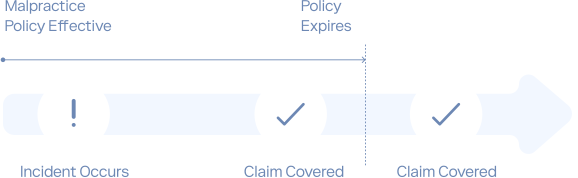
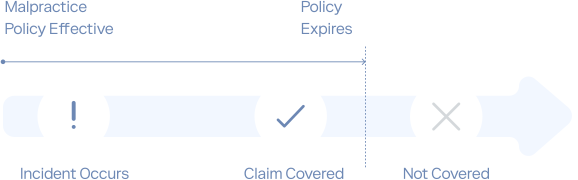
Claims-made policies are more commonly purchased in New Jersey, though occurrence policies are also available.
Coverage applies to incidents that occur during the policy period, regardless of when the claim is filed.
Coverage applies to claims filed during the policy period, requiring tail coverage for future claims.
Leading Medical Malpractice Insurance Companies in New Jersey
In addition to the below insurers, DocShield typically provides your practice with quotes from several other highly rated insurers. Ratings provided by AM Best (the leading insurance credit rating agency).
MedPro
MagMutual
Coverys
Curi
Malpractice Insurance Cost in New Jersey
The data below represent examples of undiscounted premiums and assume full-time hours. Docshield is often able to save practices 30-50% relative to these rates.
| Medical Specialty | Average Premium | Lowest Premium |
|---|---|---|
| Anesthesiology | $22,400 | $11,496 |
| Cardiovascular Disease - Minor Surgery | $26,400 | $15,062 |
| Dermatology - No Surgery | $9,500 | $6,341 |
| Emergency Medicine | $39,400 | $23,163 |
| Family Practice - No Surgery | $19,500 | $9,116 |
| Gastroenterology - No Surgery | $21,800 | $13,477 |
| General Surgery | $47,800 | $23,782 |
| Internal Medicine - No Surgery | $20,400 | $10,901 |
| Neurology - No Surgery | $19,800 | $13,477 |
| Obstetrics and Gynecology - Major Surgery | $81,600 | $39,637 |
| Occupational Medicine | $13,900 | $6,341 |
| Ophthalmology - No Surgery | $16,100 | $5,550 |
| Orthopedic Surgery - No Spine | $47,700 | $23,782 |
| Pathology - No Surgery | $12,600 | $7,927 |
| Pediatrics - No Surgery | $19,300 | $9,116 |
| Psychiatry | $16,000 | $6,341 |
| Pulmonary Disease - No Surgery | $24,000 | $13,477 |
| Radiology - Diagnostic | $18,400 | $11,496 |
Factors That Affect Malpractice Insurance Pricing in New Jersey
Even within the same specialty, malpractice insurance costs in New Jersey can vary widely.
Key pricing factors include:
- Medical specialty and scope of care, including whether a physician performs higher-risk procedures or manages complex patient populations that may increase potential claim severity
- Practice location, as claim frequency, jury outcomes, and litigation patterns can differ by county and region within the state
- Claims history, such as prior settlements or judgments, which may influence underwriting decisions and pricing over time
- Coverage limits and policy structure, including whether coverage is claims-made or occurrence-based and how reporting obligations are handled
- Practice size and employment model, such as solo practice versus large systems, which can affect shared liability and insurer appetite
Benchmarking coverage across multiple insurers can help physicians better understand how pricing aligns with their actual risk exposure and practice profile.
Working with Medical Malpractice Insurance Brokers in New Jersey
New Jersey's mandatory coverage requirements and litigation environment make broker support valuable for many physicians. Licensed malpractice insurance brokers can help physicians evaluate policy structures, compare carriers, and ensure compliance with statutory and institutional requirements.
Because brokers are not tied to a single insurer, they can assess options across multiple carriers and help physicians understand differences in pricing, limits, and coverage terms. This broader access is particularly helpful in New Jersey, where underwriting appetite can vary by specialty.
Docshield operates as a licensed brokerage while modernizing how physicians review options, making it easier to compare coverage efficiently and transparently.
Buy Affordable Malpractice Insurance with Docshield
Docshield makes it easier for physicians to evaluate malpractice insurance without disrupting busy clinical schedules. After you select a policy, Docshield reviews the market ahead of renewal to help ensure coverage and pricing remain aligned with New Jersey's requirements and market conditions.
Get a QuoteNew Jersey Claims Payout
New Jersey Statute of Limitations
The statute of limitations for medical malpractice claims in New Jersey is two years from the date the negligent act was discovered, or reasonably should have been discovered.
Additional rules apply:
- Minors: Claims may be filed until the child's 13th birthday, regardless of when the alleged malpractice occurred.
These timelines can influence long-term liability exposure and should be considered when evaluating claims-made coverage and tail obligations.
Tort Reform in New Jersey
New Jersey has implemented several targeted tort reforms aimed at improving predictability in medical malpractice litigation.
Key Tort Reform Measures
- Punitive damages cap: Limited to $350,000 or five times compensatory damages, whichever is greater
- Joint and several liability restrictions: Defendants found less than 60% at fault are responsible only for their proportionate share of damages
- Affidavit of Merit requirement: Plaintiffs must file an affidavit from a qualified medical expert within 60 days of initiating a malpractice lawsuit
- Attorney fee limits: Fees decrease as the size of the award increases
Practical Impact for Physicians
Together, these measures have helped moderate claim severity and contributed to greater market stability. However, malpractice exposure and premiums remain influenced by specialty risk and regional litigation patterns.
Recent Practice Trends Affecting New Jersey Malpractice Insurance
Several trends continue to shape malpractice insurance needs for New Jersey physicians:
- Hospital employment with supplemental coverage needs, where employed physicians may still require individual policies for services such as moonlighting, consulting, or care delivered outside employer-provided coverage
- Consolidation of health systems and physician groups, which can influence how liability is allocated and whether coverage is provided at the individual or group level
- Multi-location practice models, particularly in densely populated regions such as North Jersey, the Newark-Jersey City metro area or the Greater Philadelphia metro area, where physicians may practice across multiple facilities with differing coverage requirements
- Increased use of advanced practice providers, requiring malpractice policies to clearly define supervision, scope of practice, and shared liability
- Telemedicine and remote patient care, introducing coverage considerations tied to patient location, licensing, and jurisdiction
As practice models evolve, malpractice coverage often benefits from periodic reassessment.
How Docshield Helps Physicians Navigate New Jersey Malpractice Insurance
Navigating New Jersey's malpractice requirements and market dynamics can be time-consuming.
Docshield helps physicians by:
- Simplifying the application process
- Providing transparent comparisons across multiple insurers
- Aligning coverage with statutory minimums and specialty risk
- Supporting renewals and coverage changes as practices evolve
Together, these capabilities help New Jersey physicians manage risk while reducing administrative burden.