


Ohio Professional Liability: 2026 Guide
Ohio's medical malpractice insurance market has stabilized significantly since reforms in 2003. The state's tort reform measures, including caps on noneconomic damages, have helped reduce premiums and create a more predictable liability environment.
Medical Malpractice Insurance Requirements in Ohio
Ohio does not mandate malpractice insurance for physicians. However, most hospitals and healthcare facilities require coverage. Common policy limits are $1 million per occurrence and $3 million aggregate. The first amount is how much your insurance provider will pay per claim, and the second amount indicates your annual limit.
Occurrence vs Claims-Made Malpractice Policies in Ohio
Claims-made policies are more commonly purchased in Ohio, though occurrence policies are available. Claims-made policies typically have lower initial premiums but require tail coverage when the policy ends.
Coverage applies to incidents that occur during the policy period, regardless of when the claim is filed.
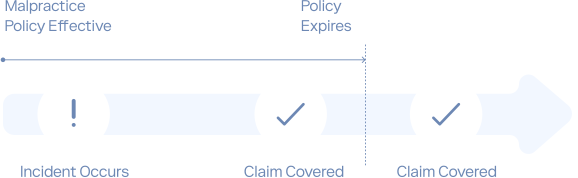
Coverage applies to claims filed during the policy period, requiring tail coverage for future claims.

Leading Medical Malpractice Insurance Companies in Ohio
In addition to the below insurers, DocShield typically provides your practice with quotes from several other highly rated insurers. Ratings provided by AM Best (the leading insurance credit rating agency).
MedPro
The Doctors Company
ProAssurance
Coverys
Malpractice Insurance Cost in Ohio
The data below represent undiscounted premiums. DocShield is often able to save practices 30-50% relative to these rates.
| Medical Specialty | Average Premium | Lowest Premium |
|---|---|---|
| Anesthesiology | $22,200 | $8,182 |
| Cardiovascular Disease - Minor Surgery | $28,600 | $10,121 |
| Dermatology - No Surgery | $9,600 | $4,513 |
| Emergency Medicine | $38,300 | $13,060 |
| Family Practice - No Surgery | $18,400 | $6,488 |
| Gastroenterology - No Surgery | $21,700 | $6,530 |
| General Surgery | $50,100 | $16,926 |
| Internal Medicine - No Surgery | $20,200 | $6,530 |
| Neurology - No Surgery | $19,300 | $6,530 |
| Obstetrics and Gynecology - Major Surgery | $74,900 | $28,210 |
| Occupational Medicine | $14,700 | $4,513 |
| Ophthalmology - No Surgery | $14,600 | $3,950 |
| Orthopedic Surgery - No Spine | $45,600 | $16,926 |
| Pathology - No Surgery | $18,700 | $4,571 |
| Pediatrics - No Surgery | $19,500 | $6,488 |
| Psychiatry | $15,900 | $4,513 |
| Pulmonary Disease - No Surgery | $19,300 | $6,530 |
| Radiology - Diagnostic | $24,400 | $6,530 |
Working with Medical Malpractice Insurance Brokers in Ohio
A licensed broker can help you navigate the administrative work involved in getting quotes and the nuances of choosing a policy that fits your particular practice. Importantly, brokers work for you, not a single insurer, so they can shop across multiple insurers to find you the most competitive premium for a high-quality policy.
Buy Affordable Malpractice Insurance with Docshield
We've built the fastest application process in the industry so you don't have to disrupt your schedule to shop for coverage. After you select a policy, we automatically scan the market every year before renewal to ensure you're paying a fair price.
Get a QuoteOhio Claims Payout
Ohio Statute of Limitations
Ohio requires medical malpractice claims to be filed within one year from the date of discovery or when the injury should have been discovered. The statute extends to four years from the date of the incident, regardless of discovery. For minors, claims must be filed before age 19.
Tort Reform in Ohio
Ohio's tort reforms include: i) caps on noneconomic damages at $250,000 or three times economic damages (maximum $350,000 per plaintiff or $500,000 per occurrence), ii) higher caps of $500,000 per plaintiff or $1 million per occurrence for catastrophic injuries, iii) periodic payment provisions for future damages over $50,000, and iv) modified joint and several liability rules limiting defendants' exposure based on their percentage of fault.