


Urology Medical Malpractice Insurance
Urology medical malpractice insurance is determined by the procedural nature of the specialty. This includes both in-office procedures and surgical interventions, along with the need for accurate diagnosis and follow-up care. Insurers generally view urology as a high-risk procedural specialty, and coverage decisions often reflect differences in case mix, patient population, and practice setting.
Docshield streamlines the way urologists evaluate malpractice insurance options by offering transparent coverage information and pricing from high-quality insurers. This process reduces the administrative burden and time investment typically involved in traditional insurance shopping.
Why Urology Medical Malpractice Insurance Is Different
Because urology involves managing conditions that require intervention and follow-up over time, malpractice exposure can vary based on procedure mix, patient population, and practice environment.
Similar to other specialties that balance diagnostic and procedural considerations, such as pathologists, urology coverage often reflects differences in how care is delivered and documented across settings.
Insurers often consider:
- The range of in-office procedures and surgical interventions performed
- Variability in case mix, including elective and medically necessary procedures
- Pre-operative evaluation and post-operative follow-up responsibilities
- Practice setting, including hospital-based, outpatient, and independent practices
- Documentation and communication across referrals and continuity of care
As a result, urology medical malpractice insurance often needs to reflect procedural exposure, ongoing patient management, and setting-specific responsibilities rather than diagnostic evaluation alone.

Speak with a Med Mal Expert
Colleen Heuer, Account Executive
Urology Malpractice Risk, by the Numbers
Malpractice claims in urology often reflect procedural complications, delayed diagnoses, and post-operative care challenges. Because urologists manage both surgical interventions and longitudinal patient care, malpractice exposure can involve a combination of procedural risk and diagnostic complexity.
- 63% of urologists report being named in a medical malpractice lawsuit (American Urological Association, Journal of Urology)
- 72.8% of urological claims are dropped, dismissed, or withdrawn with no indemnity payment (PubMed study, 2023)
- Average indemnity payments in urology exceed $350,000, with severe injury cases averaging $514,844 (AUA Journals, Urology Practice, 2015)
Common Reasons Cited for Lawsuits Against Urologists
Closed-claims research has identified the following allegation patterns:
- 71% of missed urologic diagnoses are cancer-related, making malignancy the most common diagnostic category in urology malpractice claims (Badger et al., Journal of Urology, 2007)
- Missed diagnosis claims result in indemnity payments nearly twice as high as other urology claims ($434,546 vs $226,133), reflecting higher severity when diagnostic errors occur (Badger et al., Journal of Urology, 2007)
Urology malpractice claims often reflect both diagnostic complexity and procedural risk. Missed diagnosis accounts for approximately 15% of urology claims, and these cases frequently involve cancers that present with subtle or non-specific symptoms (Badger et al., Journal of Urology, 2007).
Surgical interventions also contribute to claim exposure, particularly in procedures involving the prostate and kidneys.
The Biggest Challenges Urologists Face When Buying Malpractice Insurance
Urologists often face coverage decisions that depend on both procedural exposure and practice structure.
Understanding Procedural Risk Variation
Procedures can vary widely between urologists, from minimally invasive treatment to more complex surgical interventions. Coverage should reflect the actual scope of procedures performed.
Navigating Claims-Made Coverage Decisions
Claims-made policies are common in procedural specialties, but long-term implications are not always clear at the time of purchase. Tail coverage and prior-acts protection can significantly affect long-term coverage.
Coordinating Coverage Across Practice Settings
Urologists may work across hospitals, surgical centers, and office settings. Coverage needs to align with each location where care is delivered.
Aligning Coverage With Longitudinal Care
Unlike episodic specialties, urology often involves ongoing patient management. Policies should reflect follow-up care responsibilities and extended exposure timelines.
Managing Administrative Complexity
Traditional insurance processes can make it difficult to reassess coverage as practice structure evolves. This can limit visibility into whether coverage still aligns with actual risk exposure.
What Coverage Do Urology Practices Actually Need?
Claims-Made vs. Occurrence Coverage
Urologists typically choose between two malpractice policy structures.
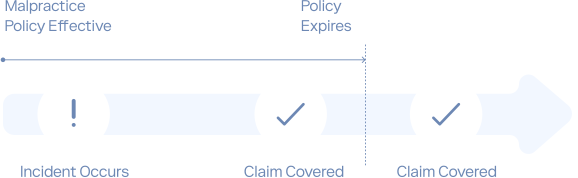
Occurrence vs Claims-Made Malpractice Policies
Understanding the two main types of malpractice insurance policy structures.
Coverage applies to incidents that occur during the policy period, regardless of when the claim is filed.
Coverage applies to claims filed during the policy period, requiring tail coverage for future claims.
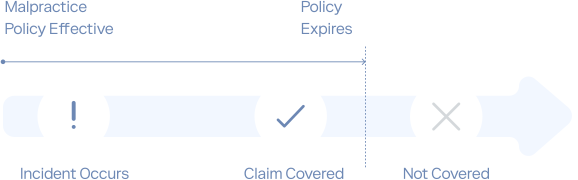
- Claims-made coverage responds only to claims reported while the policy is active. This structure may involve tail coverage obligations when coverage ends.
- Occurrence coverage applies to incidents that occur during the policy period, regardless of when a claim is filed.
Some insurers also offer claims-made plus options, where the premium is structured to include the cost of tail coverage. Availability varies by state and carrier, and practices often receive quotes for only a subset of policy structures.
The appropriate structure depends on career stage, employment stability, and long-term practice plans.
Coverage Considerations for Urologists
Coverage decisions may be influenced by:
- Surgical versus office-based procedure mix
- Practice setting, including hospital, outpatient, or independent practice
- Patient population and case complexity
- Use of advanced practice providers and supervision responsibilities
- Documentation and follow-up care expectations
- Work across multiple facilities or employment arrangements, including part-time or contract roles
Because these factors vary across practices, coverage is often most effective when tailored to actual clinical responsibilities.
Tail Coverage for Urologists
Tail coverage, also known as extended reporting coverage, allows claims to be reported after a claims-made policy ends. For urologists, tail coverage may be relevant because claims tied to surgical outcomes or diagnostic decisions may arise well after care is delivered.
Tail coverage is commonly required when a urologist:
- Leaves a group or practice
- Switches malpractice insurers
- Transitions between employment structures
- Retires from clinical practice
If you switch carriers, you may be offered prior-acts coverage that preserves your retroactive date.
Because this is not automatic and varies by insurer and underwriting, a licensed agent should confirm in writing whether prior-acts coverage is included and whether tail coverage is still required to avoid a gap.
How Much Does Urology Medical Malpractice Insurance Cost?
Malpractice insurance costs for urology vary based on several factors.
Cost Drivers
- State and local liability environment: Influences baseline premium levels
- Procedure mix: Higher-risk procedures may affect underwriting
- Claims history: Prior claims may impact pricing and eligibility
- Coverage limits: Higher limits increase premium
- Practice size and structure: Multi-provider practices may have different pricing
Malpractice insurance costs can vary significantly across procedural specialties. For example, anesthesiologists often have different pricing and risk considerations tied to perioperative care and patient acuity.
Recent Trends Changing Urology Medical Malpractice Insurance
Practice models in urology continue to evolve.
- Growth in outpatient and ambulatory surgical centers
- Increased use of minimally invasive and robotic procedures
- Expansion of telehealth for follow-up care
- Greater coordination across multi-provider practices
- Ongoing focus on documentation and outcomes tracking
As these trends continue, malpractice coverage may benefit from periodic review to ensure alignment with how care is delivered.
Docshield and Traditional Malpractice Brokers Compared
Urologists have traditionally relied on brokers, though the experience can vary depending on process and transparency.
Traditional brokers vs Docshield
| Feature | Docshield | Others |
|---|---|---|
| Med mal experts 100% focused on outpatient coverage | ||
| Online app in <15 minutes per physician | ||
| Committed to approaching a broad swathe of insurers | ||
| Transparent pricing, no hidden incentives | ||
| Continuous monitoring so you never overpay | ||
| Digital-first experience combined with 24/7 human support | ||
| Claims insights for your medical specialty |
How Docshield Works for Urology Practices
Docshield is designed to help urology practices move through the insurance process with greater clarity and efficiency.
- Apply in just minutes: Most practices can apply for quotes in under 15 minutes per physician.
- Review options with a licensed expert: A Docshield agent helps you compare quotes side by side, including policy structure, coverage limits, and key endorsements.
- Choose coverage without pressure: Select coverage deliberately based on fit, risk profile, and long-term plans.
- Add full-practice protection: Bundle additional lines such as BOP, GL, EPLI, and D&O.
- Keep coverage aligned over time: Docshield provides ongoing support through annual market reviews, updates as practice settings change, and tailored insights for eligible practices.
Looking for Urology Medical Malpractice Insurance With Clear Pricing and a Transparent Process?
Docshield helps urologists evaluate urology medical malpractice insurance options efficiently, with clear coverage details and competitive pricing.
Apply online to request quotes from high-quality insurers without unnecessary paperwork or prolonged broker interactions.
Buy Affordable Malpractice Insurance with Docshield
We've built the fastest application process in the industry so you don't have to disrupt your schedule to shop for coverage. After you select a policy, we automatically scan the market every year before renewal to ensure you're paying a fair price.
Get a Quote